Introduction
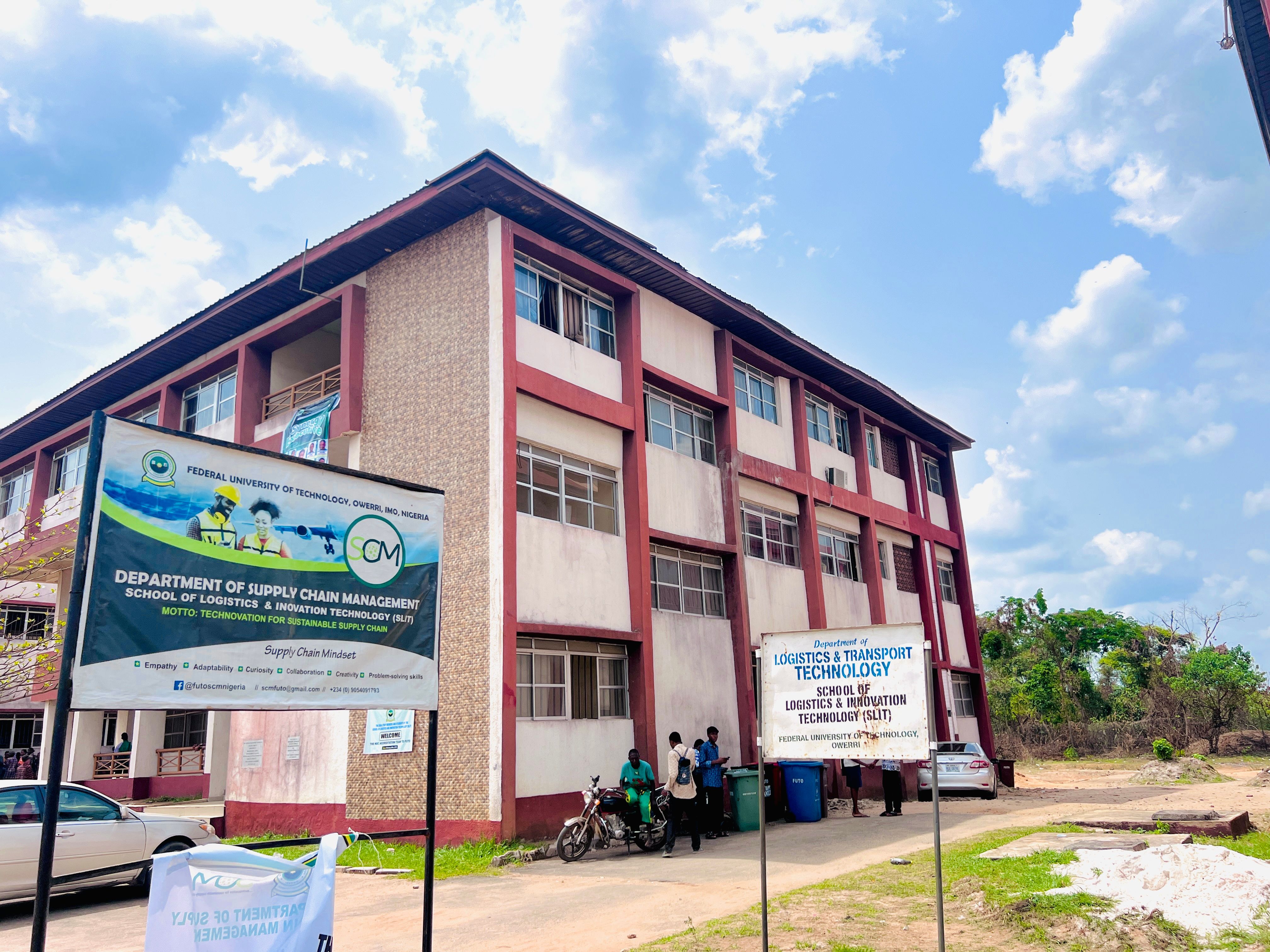
The Senate of the Federal University of Technology, Owerri during her meeting held on January 28, 2021 approved the establishment of the Department of Supply Chain Management (whose nomenclature was change to the Department of Logistics and Supply Chain Management at the Senate meeting held on September 26, 2024) with mandate to run the Bachelor of Technology (B. Tech) programme in Logistics and Supply Chain Management in the School of Logistics and Innovation Technology (SLIT).
Objectives of the Programme
The objectives of the B.Tech in Logistics and Supply Chain Management programme include:
- To educate and train graduates in the theories, principles and practices of Logistics and Supply Chain Management in government, non-governmental and private business sectors of the Nigerian economy.
- To expose graduate to the diverse knowledge areas require for effective practice of Logistics and Supply Chain Management profession, through compulsory cross-cutting exposure to science, engineering, technology, operations management, business management and entrepreneurship disciplines.
- To expose the graduates with adequate technical knowledge and adaptive skills to apply disruptive technologies to traditional Logistics and Supply Chain Management systems leading to improvements in productivity and value creation.
- To produce graduates who are multi-skilled, talented and capable of being innovators and solvers of problems in Logistics and Supply Chain Management value chain of organisations.
- To develop the entrepreneurial skills of graduates for value and employment creation within domestic and international Logistics and Supply Chain Management ecosystems.
Goals
The goals of the B.Tech Logistics and Supply Chain Management Programme include:
- To produce knowledgeable and competent manpower in relevant areas of Logistics and Supply Chain Management, capable of planning, implementing, monitoring and controlling Logistics and Supply Chain Management in business, government and non-governmental organisations.
- To produce technical and technology savvy Logistics and Supply Chain Management professionals capable of identifying and taking advantage of opportunities in the Logistics and Supply Chain Management value chain of Nigeria and world at large
- To produce knowledgeable and highly skilled manpower who are adequately equipped to participate in the formulation, implementation and enforcement policies, rule and regulation governing the practice of Logistics and Supply Chain Management profession in Nigeria.
- To produce technical and technology informed entrepreneurs capable of identifying and taking advantage of business opportunities in the Logistics and Supply Chain Management value chain of Nigeria; thereby creating jobs and value for themselves and their communities.
Core Values
The core values of the programme of Logistics and Supply Chain Management include the following:
- Empathy,
- Adaptability,
- Creativity,
- Problem-solving skills,
- Curiosity, and
- Collaboration
Employability Skills
- Information technology skills in the adoption of artificial intelligence, Internet of Things, use of software and apps in Logistics and supply chain management.
- Computational abilities requiring mathematics and statistics for analysis of supply and demand issues.
- Negotiation and relationship building capabilities in relation to customers, suppliers and team members.
- Ability to use data to capture orders, demand and sales, and wastages resulting from inefficiencies and lapses.
- Due diligence and care with thorough and broad knowledge of the industry and business/economic environment; and
- Understanding of organizational systems and business environment relevant for decision making in Logistics and Supply Chain Management
21st Century skills
- Critical thinking;
- Communication skills;
- Creativity;
- Problem solving;
- Perseverance;
- Collaboration;
- Information literacy;
- Technology skills and digital literacy;
- Media literacy;
- Global awareness; and
- Self-direction.