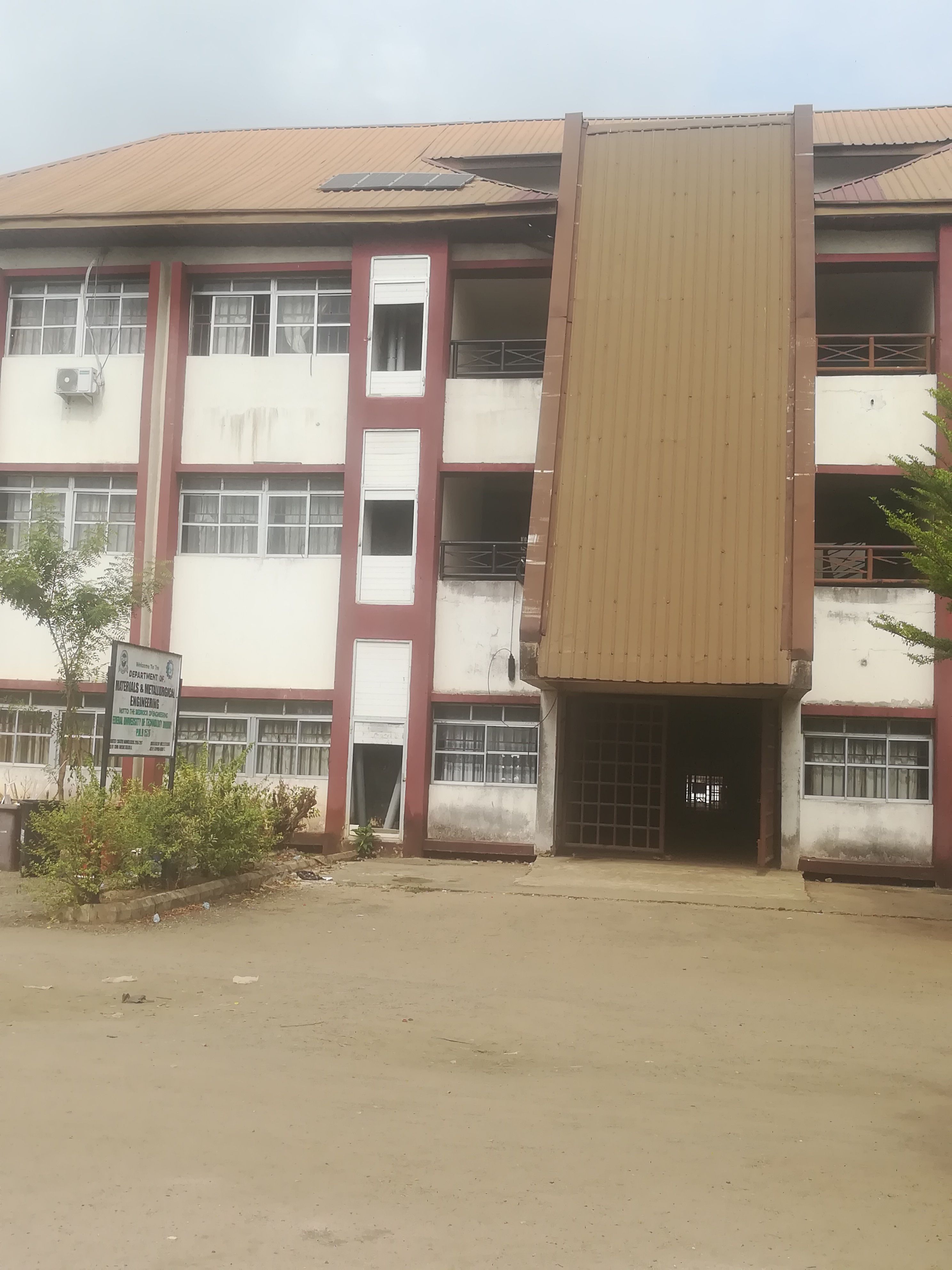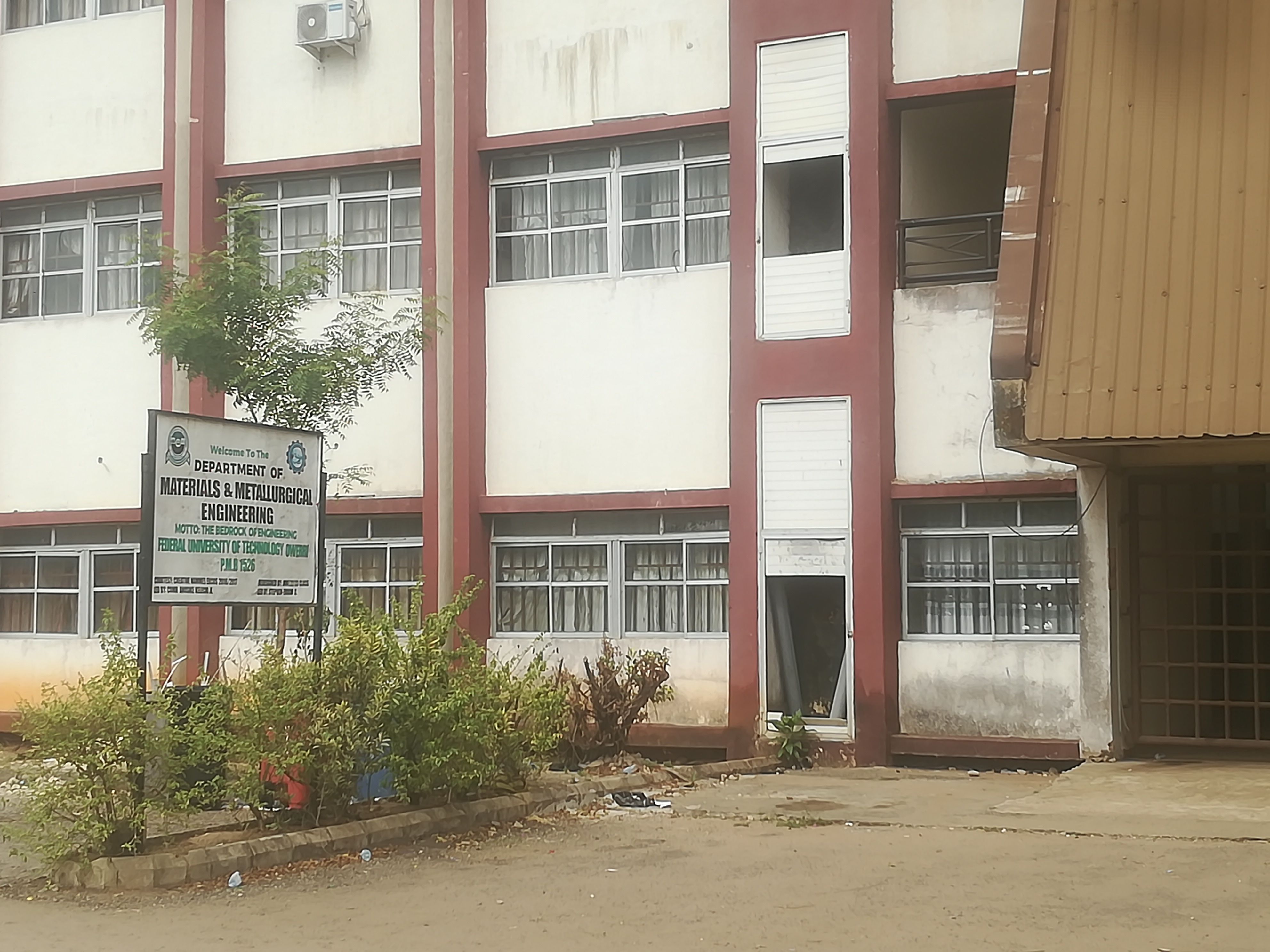
Introduction to Materials and Metallurgical Engineering Discipline
Have you ever wondered about the range of materials that are employed in applications as diverse as aerospace, motor vehicles, foodstuffs and pharmaceuticals packaging, bridges, biomedical/orthopaedic implants, and computer and electronics hardware? Have you also thought about what causes the failure of an aero plane engine, leakage in storage tanks and oil pipelines, explosions in boilers, and structural failure of buildings? What about the materials with which drill bits are made so that they can be used to tear through rocks underground in oil drilling? These questions, problems, and their answers or solutions fall within the field of Materials and Metallurgical Engineering (MME) or Materials Science and Engineering (MSE) – following modem trends in terminology.
Materials are essential to the construction of any engineering structure from the smallest integrated circuit to the largest bridge. In almost every technology, the performance, reliability, or cost is determined by the materials used. As a result, the drive to develop new materials and processes (or to improve existing ones) makes Materials and Metallurgical Engineering one of the most important and dynamic engineering disciplines. The field is concerned with the design, manufacture, and use of all classes of materials (including metals, ceramics, semiconductors, polymers, nanomaterials, and biomaterials and with energy, environmental, health, economic, and manufacturing issues relating to materials. The very nature of Materials and Metallurgical Engineering means that it cuts across other disciplines.
The dominant theme of Materials and Metallurgical Engineering is the relationships among the structure/composition, processing properties, and performance of materials are crucial to their function in engineering systems. All engineering products utilize materials. The steel of automobiles, building structures, the materials for aircraft and ocean-going vessels, the concrete of highways, and the less apparent but equally important materials of electronic circuits, the carbide bits on oil well drills, etc., are all engineering materials. Each of these products requires materials with specific characteristics such that the material can be processed into the final products satisfactorily and economically and the products will behave appropriately in service. Materials and their properties are important design considerations in many engineering projects. In many cases, the success of major new technology hinges critically upon new and unforeseen demands on materials performances.
Metallurgical Engineering is the study of the production, properties, and uses of metals and alloys. It had been traditionally offered by many universities worldwide because of the extensive use of metals, for instance, iron and steel, aluminum, copper, titanium, magnesium, beryllium amongst others, and their alloys in engineering products. Within the decade preceding 1970, concurrent with the nucleation and growth of new disciplines, came the establishment of the Materials Engineering course. It is closely allied to Metallurgical Engineering but broadens the scope of engineering materials beyond that of metals and their alloys. Materials Engineering is therefore interested in the properties of a wider range of materials including electronic materials, ceramics, glass, polymers, and many other natural and man-made materials. The Materials or Metallurgical Engineer must therefore know how to manufacture and specify the materials for suspension bridges, TV sets, computers, oil refineries, rocket motors, nuclear reactors, supersonic transport vehicles, ocean-going vessels, electricity generating stations, automobiles, telecommunication equipment etc. Students are therefore inadequately exposed to the physics and chemistry of materials: with emphasis on the structure-property relations, the changes in structure, and the concomitant property changes realizable through thermal and mechanical treatments. The programme furthermore aims at interlacing the above knowledge with adequate engineering and technology content.
MEE PROGRAMME EDUCATIONAL OBJECTIVES [PEOs]
It is expected that our graduates will achieve one or more of the following PEOs within the first three [3] to five [5] years of their graduation from our program, in alignment with the expectations of the Council for Regulation of Engineering in Nigeria (COREN).
PEO 1: Technical Competence and Professional Excellence: Graduates will demonstrate sound theoretical knowledge, practical engineering skills and professional competence in applying mechanical engineering principles to analyze, design, develop, operate and maintain engineering systems and process.
PEO 2: Innovation, Research and Problem-Solving: Graduates will demonstrate creativity, critical thinking and innovative abilities in identifying, analyzing and solving complex engineering problems through research, emerging technologies, computational tools and sustainable engineering solutions.
PEO 3: Leadership, Communication and Teamwork: Graduates will function effectively as individuals and members or leaders of multidisciplinary teams, demonstrate effective communication, interpersonal skills, project management and leadership capabilities in professional engineering environments.
PEO 4: Entrepreneurship and Industrial Development: Graduates will demonstrate entrepreneurial initiative, business awareness and managerial competence in establishing, managing and improving engineering enterprises, manufacturing systems and technology-driven ventures that contribute to economic and industrial development.
PEO 5: Ethics, Safety and Social Responsibility: Graduates will uphold professional ethics, integrity, accountability and engineering standards while demonstrating commitment to public safety, environmental protection, societal welfare and sustainable development.
PEO 6: Lifelong Learning and Global Competitiveness: Graduates will pursue continuous professional development, advanced education and lifelong learning while adapting to technological advancements, global engineering practices and emerging challenges in the engineering profession.
Programme Outcomes (POs)
The Programme Outcomes of the Materials and Metallurgical Engineering Programme are consistent with the COREN Graduate Attributes and are stated as follows:
PO 1: Engineering Knowledge: At the end of the programme, a graduate that has passed through the programme shall be able to apply knowledge of mathematics, science, engineering fundamentals and Materials and Metallurgical Engineering specialisation to the solution of complex engineering problems;
PO 2: Problem Analysis: At the end of the programme, a graduate that has passed through the programme shall be able to identify, formulate, research literature and analyse complex engineering problems reaching substantiated conclusions using first principles of mathematics, natural sciences and Materials and Metallurgical Engineering;
PO 3: Design and Development of Solutions: At the end of the programme, a graduate that has passed through the programme shall be able to proffer solutions for complex engineering problems in Materials and Metallurgical Engineering and designs systems, components or processes that meet specified needs with appropriate consideration for public health and safety, cultural, societal and environmental considerations;
PO 4: Investigation: At the end of the programme, a graduate that has passed through the programme shall be able to conduct investigation into complex problems in Materials and Metallurgical Engineering using research-based knowledge and research methods including design of experiments, analysis and interpretation of data, and synthesis of information to provide valid conclusions;
PO 5: Modern Tool Usage: At the end of the programme, a graduate that has passed through the programme shall be able to create, select and apply appropriate techniques, resources and modern engineering and ICT tools in Materials and Metallurgical Engineering, including prediction, modelling and optimization of complex engineering activities, with an understanding of the limitations;
PO 6: Environment & Sustainability & The Engineer and Society: At the end of the programme, a graduate that has passed through the programme shall be able to understand the environmental and societal impacts of Materials and Metallurgical Engineering solutions, apply principles of sustainable development, and consider health, safety, legal, cultural, and social responsibilities in professional practice;
PO 7: Ethics: At the end of the programme, a graduate that has passed through the programme shall be able to apply ethical principles and commit to professional ethics and responsibilities and norms of Materials and Metallurgical Engineering practice, including adherence to the COREN Engineers Code of Conducts;
PO 8: Individual and Team Work: At the end of the programme, a graduate that has passed through the programme shall be able to function effectively as an individual, and as a member or leader in diverse teams and in multi-disciplinary settings within Materials and Metallurgical Engineering;
PO 9: Communication: At the end of the programme, a graduate that has passed through the programme shall be able to communicate effectively on developmental or complex Materials and Metallurgical Engineering activities with the engineering community and with society at large, such as being able to comprehend and write effective reports and design documentation, make effective presentations, and give and receive clear instructions.
PO 10: Project Management and Finance: At the end of the programme, a graduate that has passed through the programme shall be able to demonstrate knowledge and understanding of Materials and Metallurgical Engineering, management and financial principles and apply these to one’s own work, as a member and leader in a team, to manage projects and in multi-disciplinary environments;
PO 11: Lifelong Learning: At the end of the programme, a graduate that has passed through the programme shall be able to recognise the need for, and have the preparations and ability to engage in independent and lifelong learning in the broadest context of Materials and Metallurgical Engineering and technological and social changes.
Engr. Prof. S. I. Onwukwe
Head of Department, Materials and Metallurgical Engineering