
About CIMS-NTDs
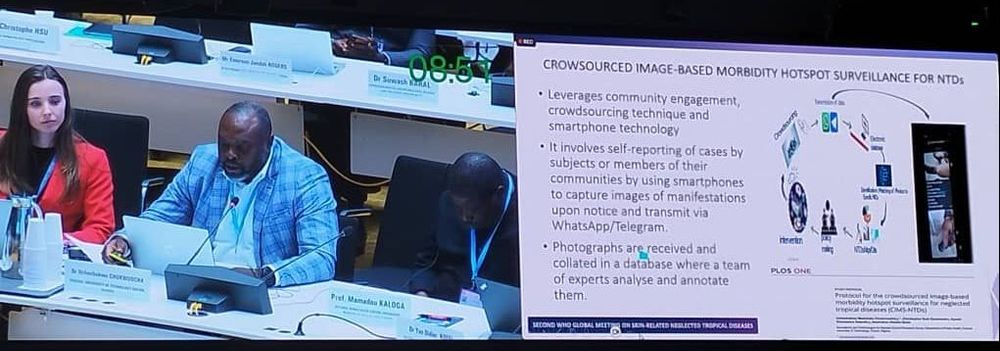
CIMS-NTDs is a new surveillance method designed to empower individuals affected by neglected tropical diseases (NTDs) to self-report their cases digitally. The method was developed and piloted in Nigeria (2022–2024) by the Innovations and Technologies for Disease Control Research Group, Department of Public Health, Federal University of Technology, Owerri (FUTO), Nigeria, through a research grant from the Bill and Melinda Gates Foundation (NTDs).
Pilot Study Overview
The pilot study was conducted in 45 communities across three states in Nigeria, covering approximately 477,138 people. The study involved:
Sensitizing individuals and communities to self-report NTD cases.
Ethically capturing skin and eye manifestations using smartphones.
Submitting images via WhatsApp and Telegram to a central database for expert analysis and identification.
Conducting a cross-sectional study to assess user experience, acceptance, and satisfaction.
Conducting key informant interviews with NTD program officers to evaluate the method’s potential and challenges.
Key Findings
Over four months, the study collected 512 morbidity images, of which 386 (75.4%) were confirmed as NTD cases. The CIMS-NTDs method outperformed traditional surveillance methods, achieving:
A mean monthly reporting rate of 54.3 cases compared to 6.8 in study states and 1.5 in control states.
Identification and mapping of NTD morbidity hotspots in study areas.
Positive feedback from stakeholders, highlighting the method’s efficiency, privacy, and ability to engage communities.
Future Prospects
The CIMS-NTDs method demonstrates great potential in enhancing NTD surveillance through community participation and technology, accelerating the global goal to eliminate NTDs by 2030. Efforts are underway to:
Scale up and integrate CIMS-NTDs into Nigeria’s National NTD Elimination Program.
Expand its use across sub-Saharan Africa and other NTD-endemic regions.
Collaborate with the WHO Skin NTDs App Development Team to develop and validate the WHO AI-enabled Skin NTDs Application, with the possibility of integrating it with CIMS-NTDs.
This innovative approach represents a significant leap forward in digital health surveillance, bringing technology-driven solutions closer to communities affected by neglected tropical diseases.